How to get a dog to look at the camera
Treat attention as something you spend rather than something you summon. Frame the shot, set the focus and the exposure, and only then make one sound the dog has never heard, from directly beside the lens. You get roughly half a second of a straight look. Two people make it far easier than one. Stop after a few attempts, because a bored dog does not come back in the same session.
In short
- Set up the whole photograph before you ask for anything. Attention is spent while the camera focuses.
- New sounds work; familiar ones do not. Each sound is good for roughly one honest look.
- Hold the interesting object beside the lens, and put the lens at the animal's eye level.
- Two people make it easy: one on the camera, one behind their shoulder making the noise.
- Stop early. A bored dog does not become interested again in the same session.
You get about half a second, so set up first
The common failure is not that the dog will not look. It is that the dog looks beautifully, once, while the photographer is still deciding where to stand. By the time the camera is up, the moment has been spent and the animal has concluded that whatever the noise meant, nothing followed it.
So do everything else first. Choose the spot, put the light where you want it, frame with a little room around the head, tap to focus on the face, and take one throwaway photograph of the empty background to confirm the exposure. The dog does not need to be part of any of that. Only when the camera is finished thinking do you ask for attention.
This is also why the general advice in the guide to photographing your pet puts light and framing before anything about behaviour. Every second the camera spends focusing is a second of a resource you cannot get back.
Spend a new sound, not a familiar one
A dog turns towards novelty, not towards volume. Their name has been said thousands of times with nothing interesting attached, so it produces an ear flick and a look that lands somewhere past your shoulder. A sound they have never heard before produces the thing you actually want, which is a head-on stare with both ears forward.
The catch is that novelty is single-use. A squeak, a kissing noise, a fingernail on a paper bag, a whistle through your teeth: each one works properly once, works a bit less the second time, and by the fourth it is furniture. Bring several, use each once, and make the noise from directly beside the lens so the eyes land where the camera is rather than off to the side.
Do not burn a working cue on a photograph either. If sit and wait are reliable, use them to place the dog and then use something disposable for the look itself, so that a training word does not become a word that sometimes means nothing at all.
| What to try | What it buys you |
|---|---|
| A sound they have never heard | One straight look, about half a second, and noticeably less on the second attempt. |
| Their own name | An ear flick and a glance somewhere near you. Useful for orientation, rarely for eye contact. |
| A favourite toy held at the lens | A long, hard stare — and a body that is about to move, so take the photograph early. |
| Food held above the camera | Reliable attention with the chin lifted, which flatters some dogs and makes others look anxious. |
| A second person calling from behind you | The steadiest option, and the only one that leaves both your hands on the camera. |
Put what they want beside the lens
Wherever the interesting object is, that is where the eyes go, and a treat held at chest height produces a portrait of a dog looking at your chest. Hold it just above or beside the lens instead, close enough that the difference in angle disappears, and the dog appears to be looking at the viewer.
Height matters as much as position. Get the camera down to the animal's eye level, or slightly below it for a small dog, so that a look towards the lens is a level look rather than a look up at somebody standing over them. Kneeling changes more about a pet photograph than any setting on the camera does.
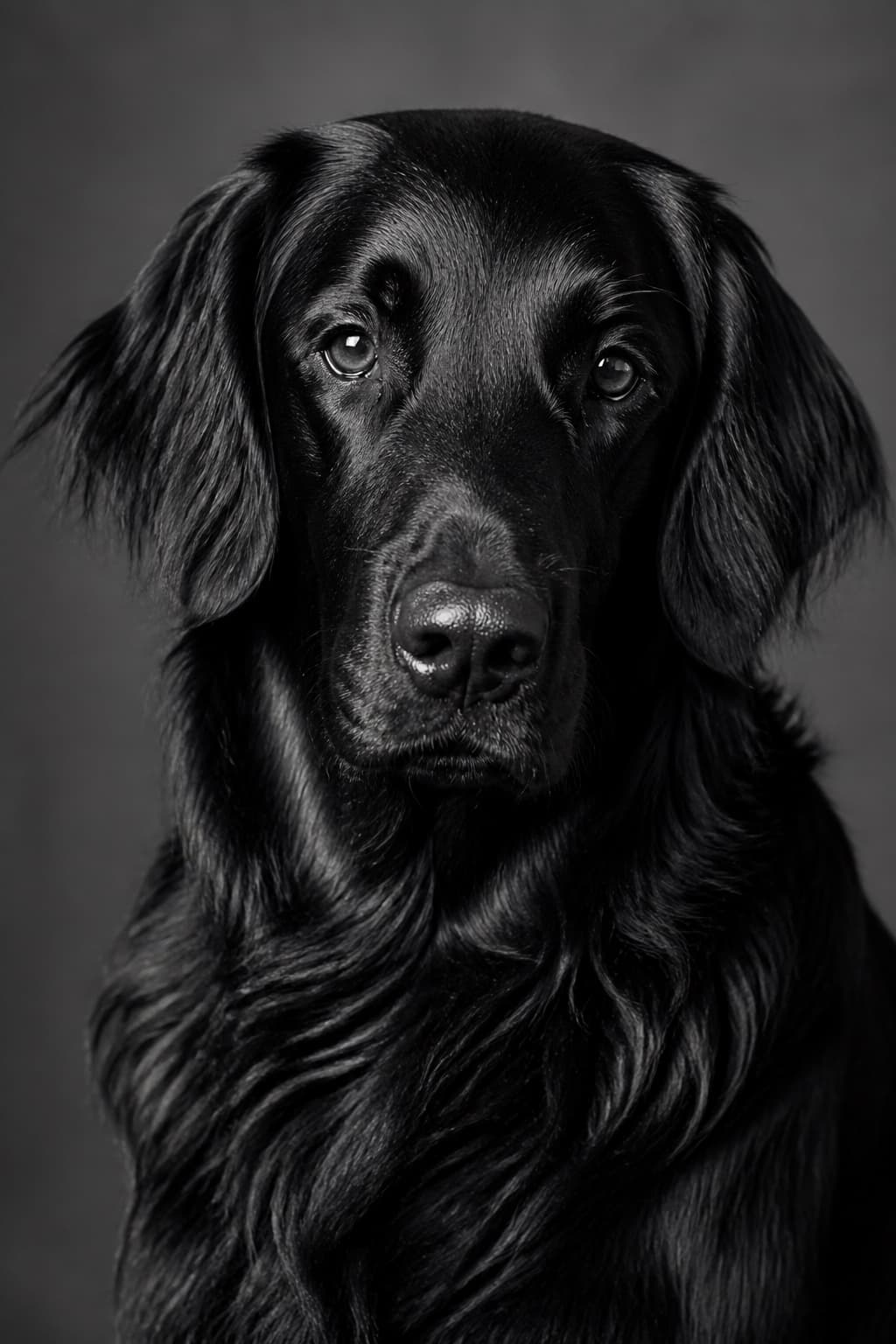
What a straight look down the lens buys you: with the colour gone and the crop this close, there is nowhere for a glance that landed slightly off-centre to hide.
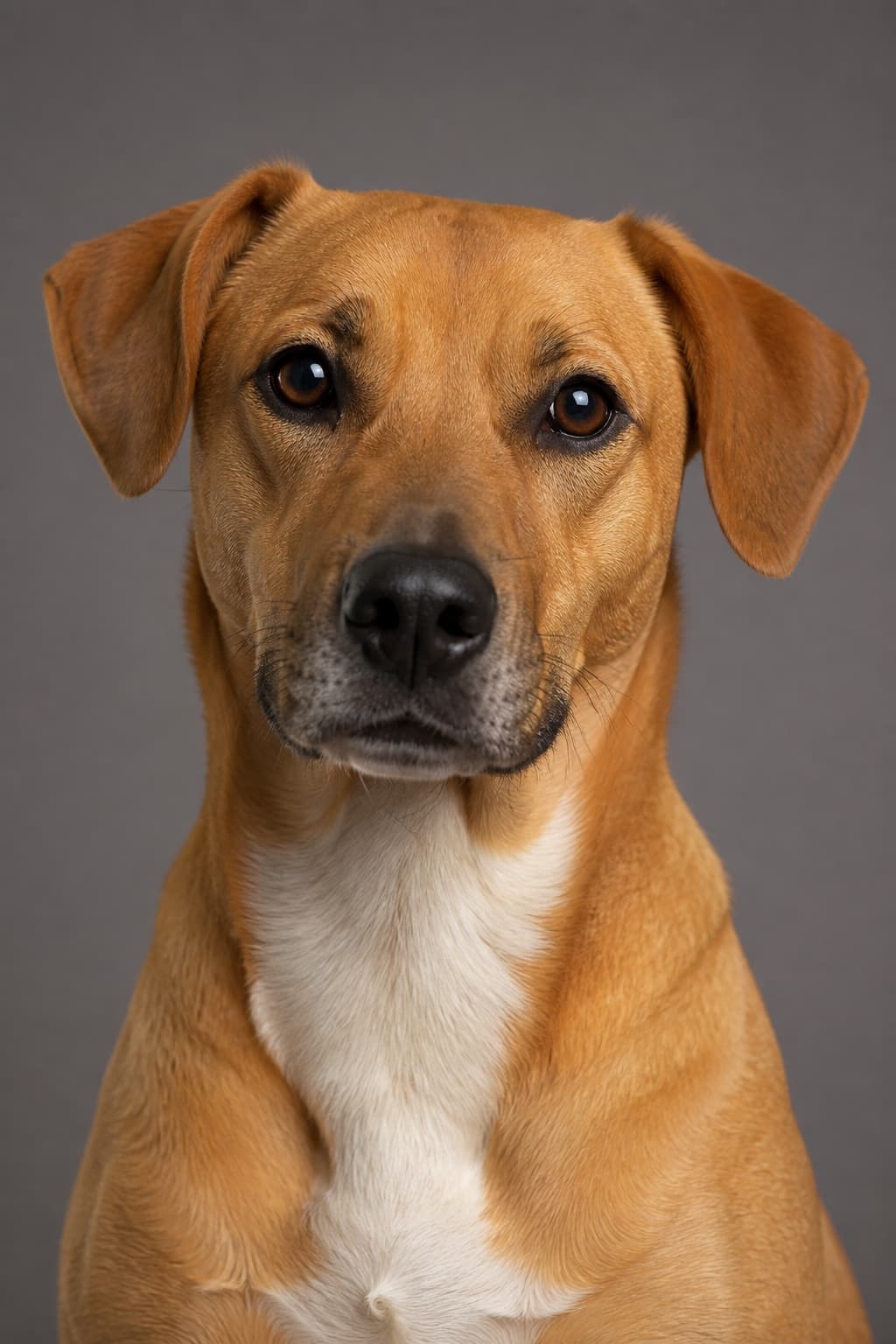
Both eyes lit and both pointed the same way. The reason to work at eye level is that this level, symmetrical look is almost impossible to get from standing height.
Created with PetPhotos from a described animal, not a customer's photos. Not stock photography.
Two people is the whole trick
One person holding a camera, a treat and a squeaky toy while also making an unfamiliar noise is doing four jobs badly. Two people split it cleanly: one works the camera, the other stands directly behind the photographer's shoulder and makes the noise. The dog looks at the noise, the noise is next to the lens, and the photographer never takes their eye off the frame.
Give the second person the job description out loud, because the instinct is to stand beside the photographer rather than behind, which sends the eyes off to one side by exactly enough to spoil the photograph. Behind the shoulder, at the photographer's head height, holding the interesting thing high.
- Photographer kneels, frames, focuses, and says when they are ready.
- Helper stands behind the photographer, not beside them.
- Helper makes one sound, once, and stops when the photographer says.
- Nobody says the dog's name unless the picture actually needs a head turn.
Some dogs never look, and that is a picture too
A few animals genuinely will not hold eye contact, and with dogs who find a lens uncomfortable it is worth not insisting. A shy dog stared at through a black circle is a shy dog in a photograph, and the discomfort is visible in the ears and the whites of the eyes long before anyone can say why the picture feels wrong.
The alternative is a portrait that never asks. Photograph them settled and looking somewhere else entirely, which is the whole premise of the Window Light style, or catch them mid-movement and let the picture be about the animal rather than about the eye contact. A dog looking out of the frame is a composition, not a failure.
Whatever you get, stop while it is still going well. Three attempts and a break beats twenty attempts and a dog who has learned that the camera means being nagged. If you are photographing specifically for something that has to look like them, such as a gift for somebody else, a short patient session in good light beats a long one, and the light problem is covered separately in how to photograph a black dog.