Cats leave the moment a phone comes out
Point a lens at a cat that was, until a second ago, sitting perfectly still in a patch of sun, and it will get up, walk towards you and headbutt the camera. The photograph you wanted existed for about four seconds and it existed before you decided to take it. That is a fixed property of cats rather than a skill you are missing.
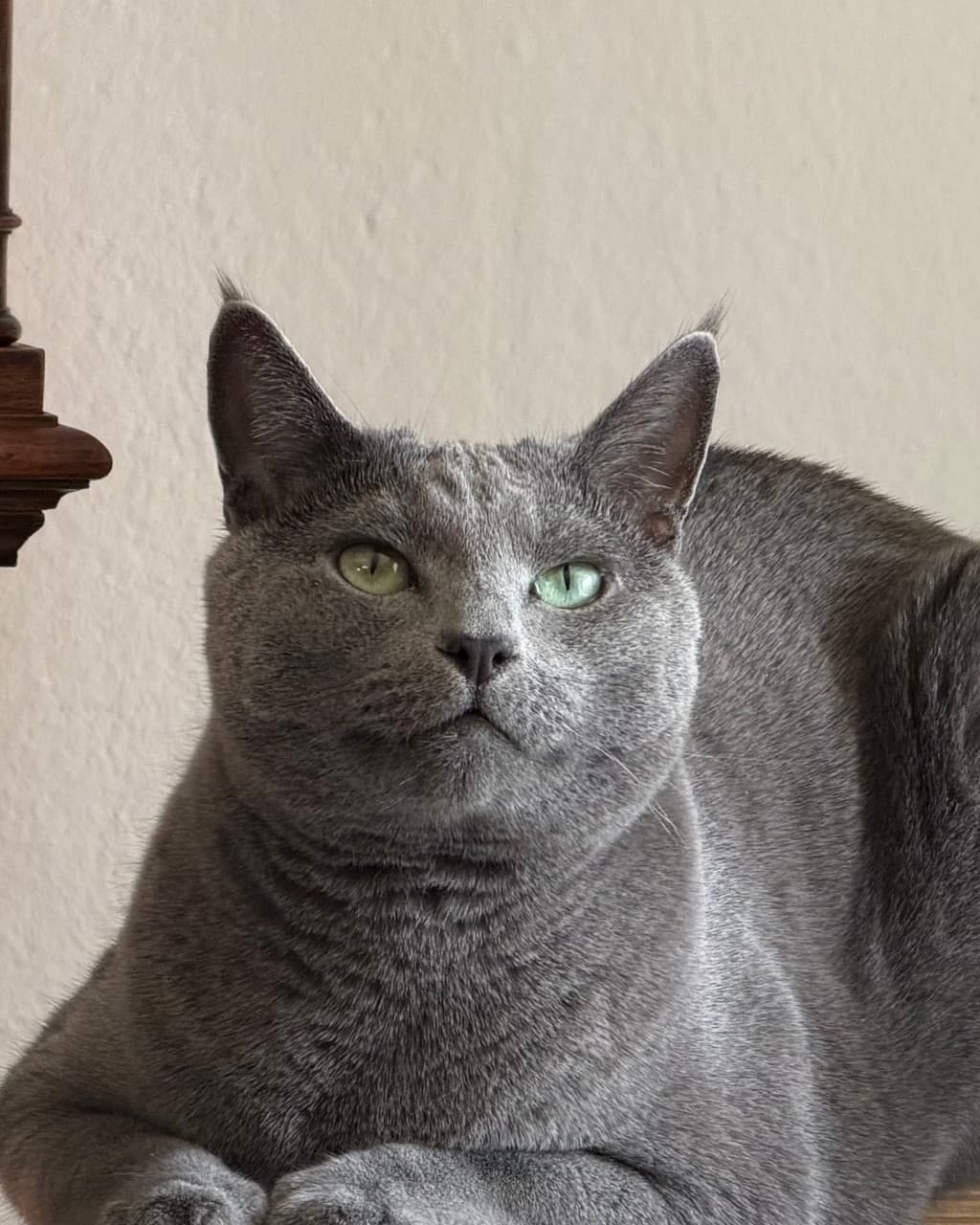
So the references do not have to be good, only close. A picture taken from above, of a cat looking up at you with an expression of mild contempt, is a perfectly usable reference: it records the eye colour, the nose leather, and the exact way the tabby stripes break across the forehead. The portrait is built from that, not cropped out of it.
Indoor light is the real constraint here
Most cat photographs are taken indoors, in light that a camera finds far dimmer than your eye does. The phone compensates by raising the sensitivity, which smears fur into soft grey mush, and by slowing the shutter, which turns a tail-flick into a streak. It looks acceptable on the screen and falls apart the moment anything is enlarged.
The fix costs nothing. Wait until the cat is within a metre or so of a window in daylight, and turn the room lights off rather than on — mixed lamplight and daylight is what gives indoor pet pictures that orange-and-blue split down the middle. A single window is both brighter and cleaner than any bulb in the house.
Styles that suit an animal which refuses to perform
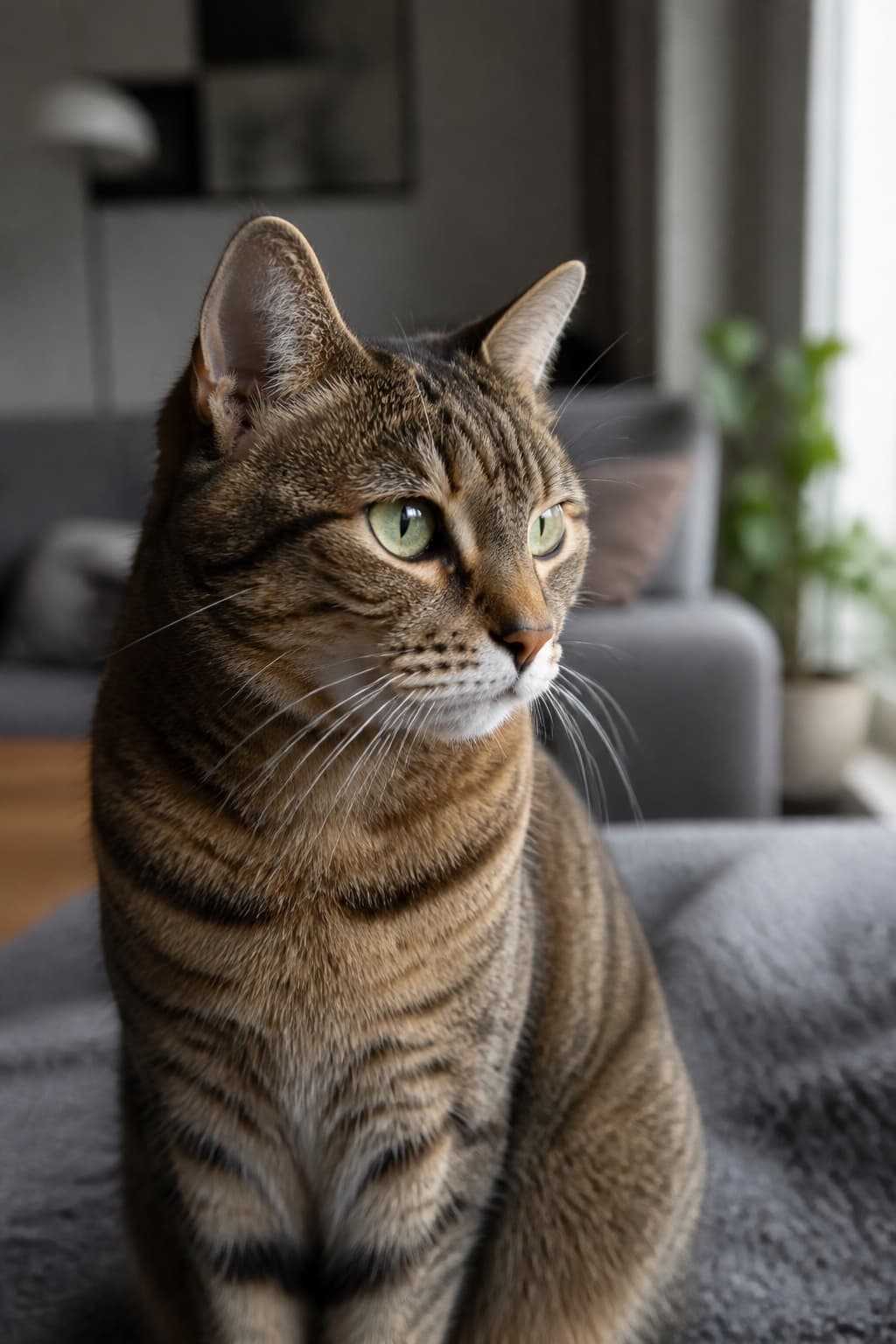
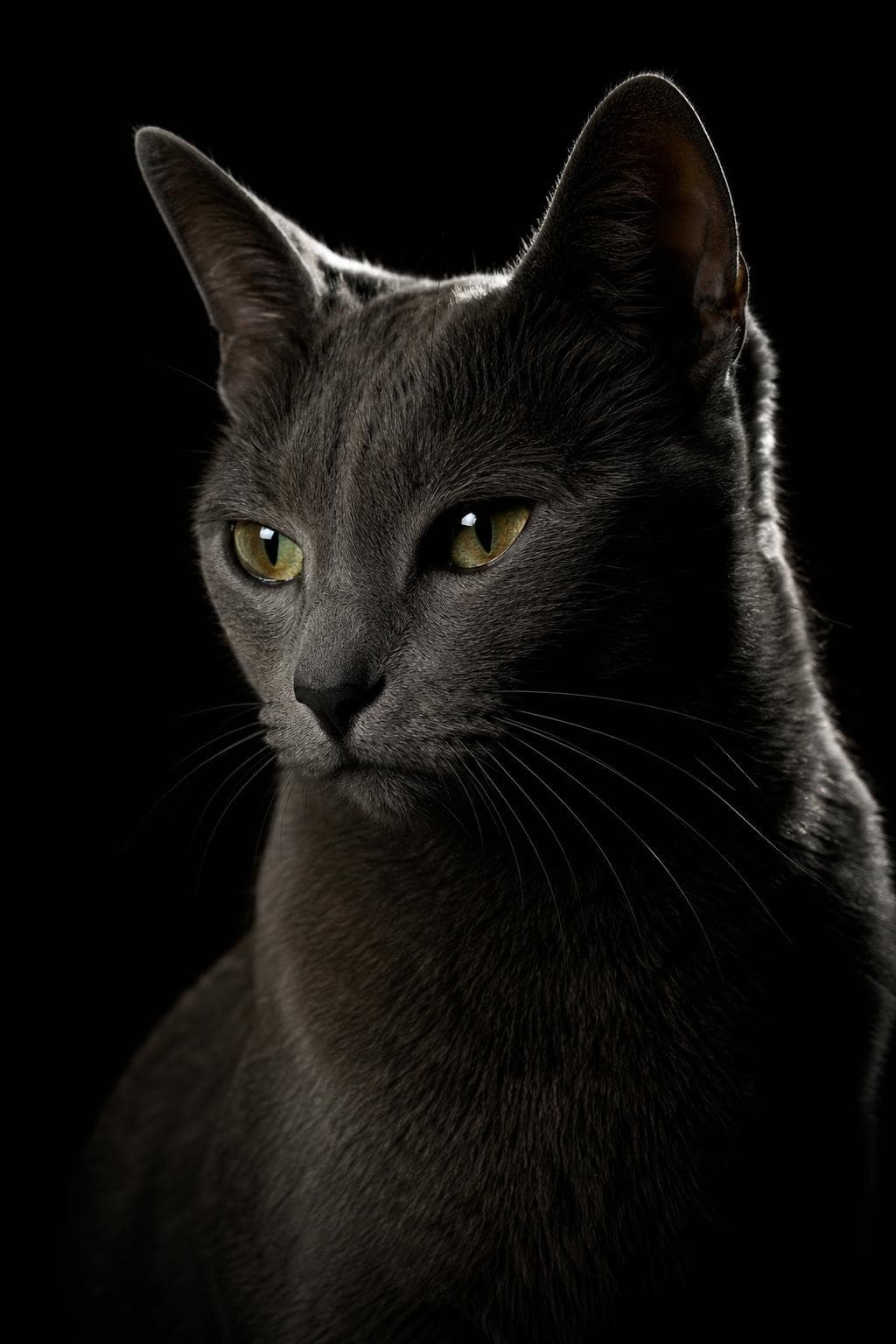
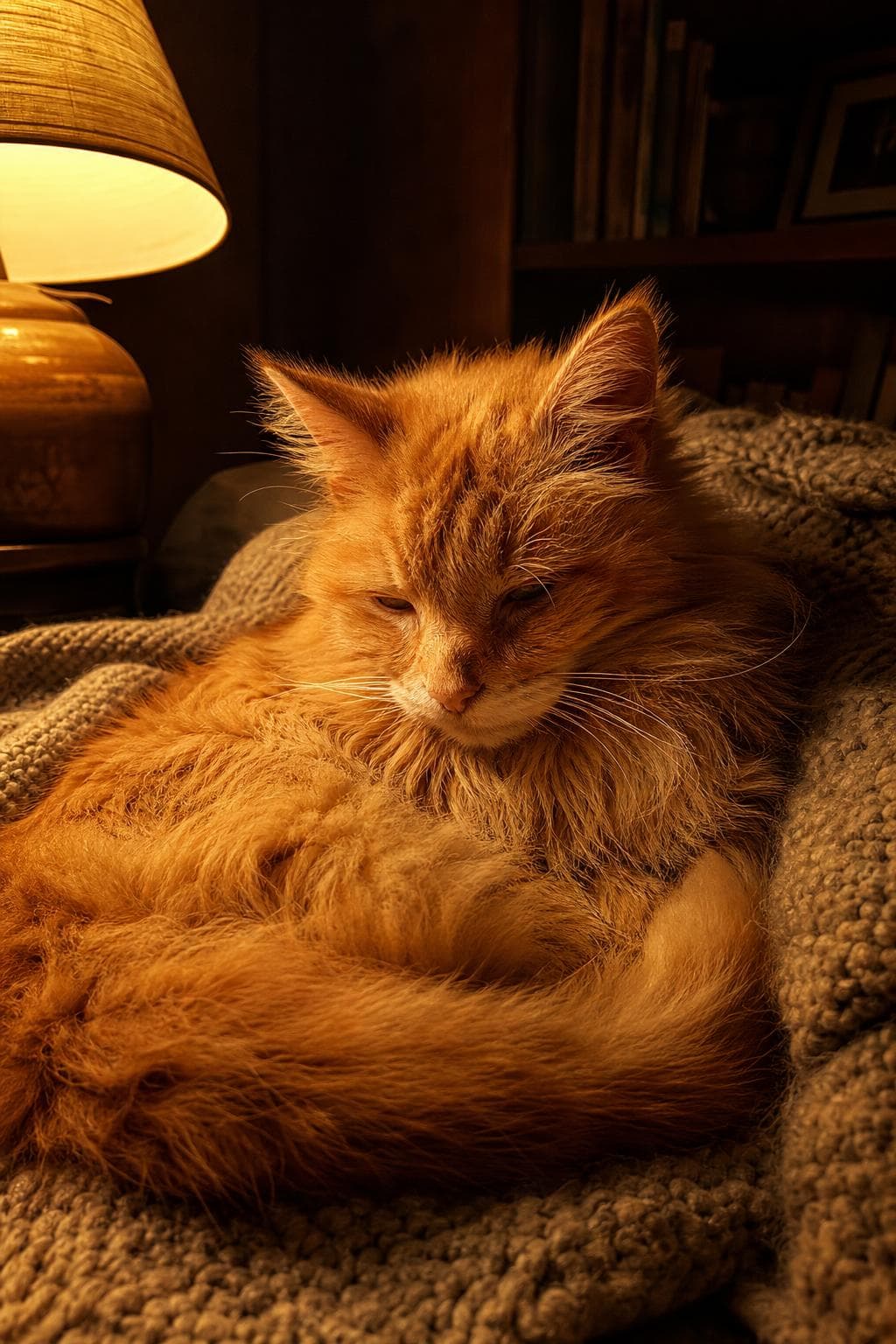
A cat in a formal studio sweep tends to look like a cat that has been put somewhere. The styles that hold up are the ones that let the animal be indoors and unbothered: daylight from a window with the room dissolved behind it, a dark frame where only the outline and the eyes are lit, or a blanket and a lamp at the hour when nothing further is going to happen.
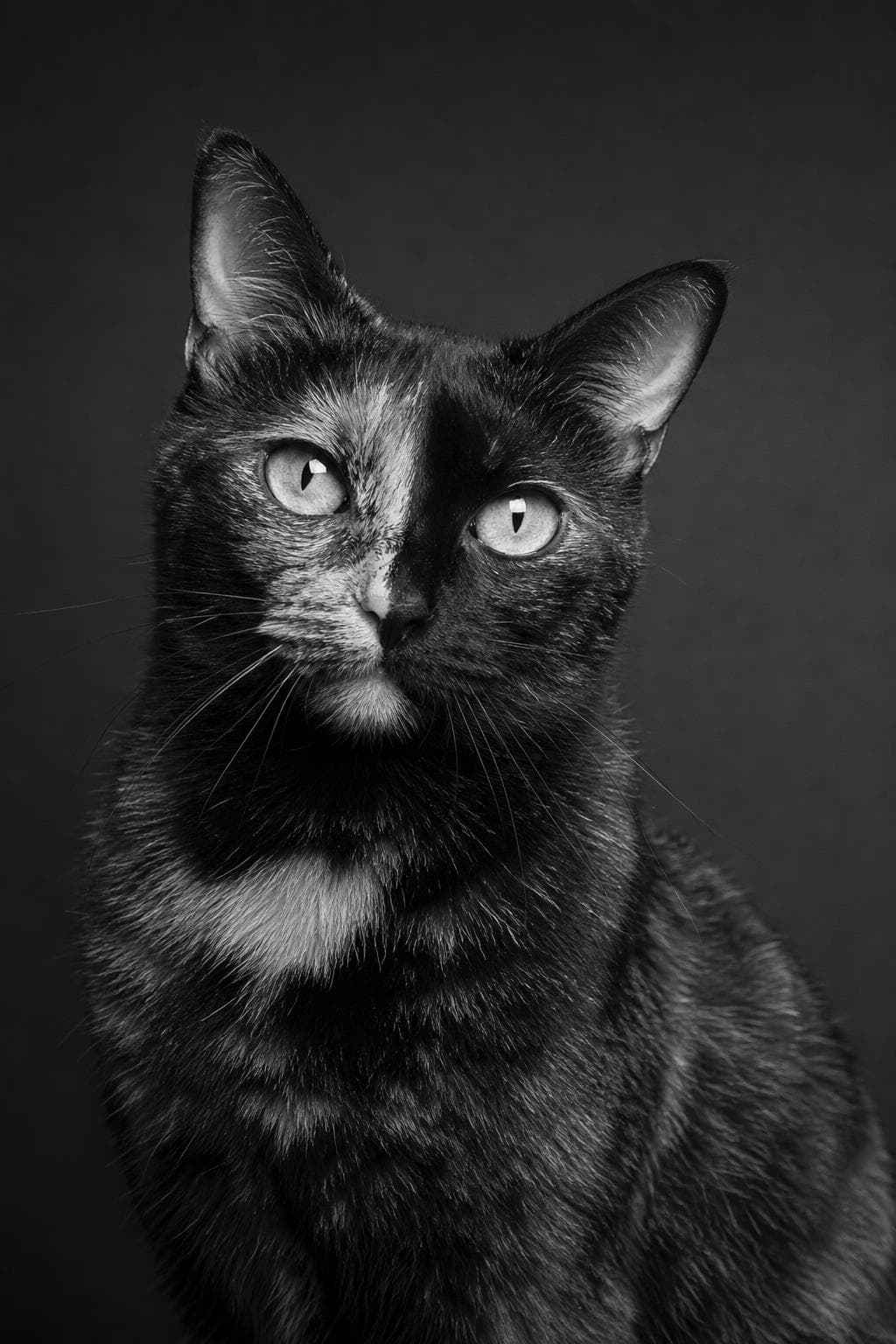
One exception is worth making. Monochrome suits cats better than it suits most dogs, because a tabby, a tortoiseshell or a colourpoint is a pattern before it is a colour, and removing the colour lets the pattern be the picture. It is also the kindest treatment of a black cat, whom colour photography renders as a silhouette with two eyes in it.