A card is a layout before it is a photograph
The reason last year's card looked cramped is not the photograph, it is that the photograph was square and the card was not. A greeting has to go somewhere, and if nobody planned for it, it ends up printed across the dog's chest in whatever colour survives what is behind it. Cards are built around empty space and pet pictures almost never have any.
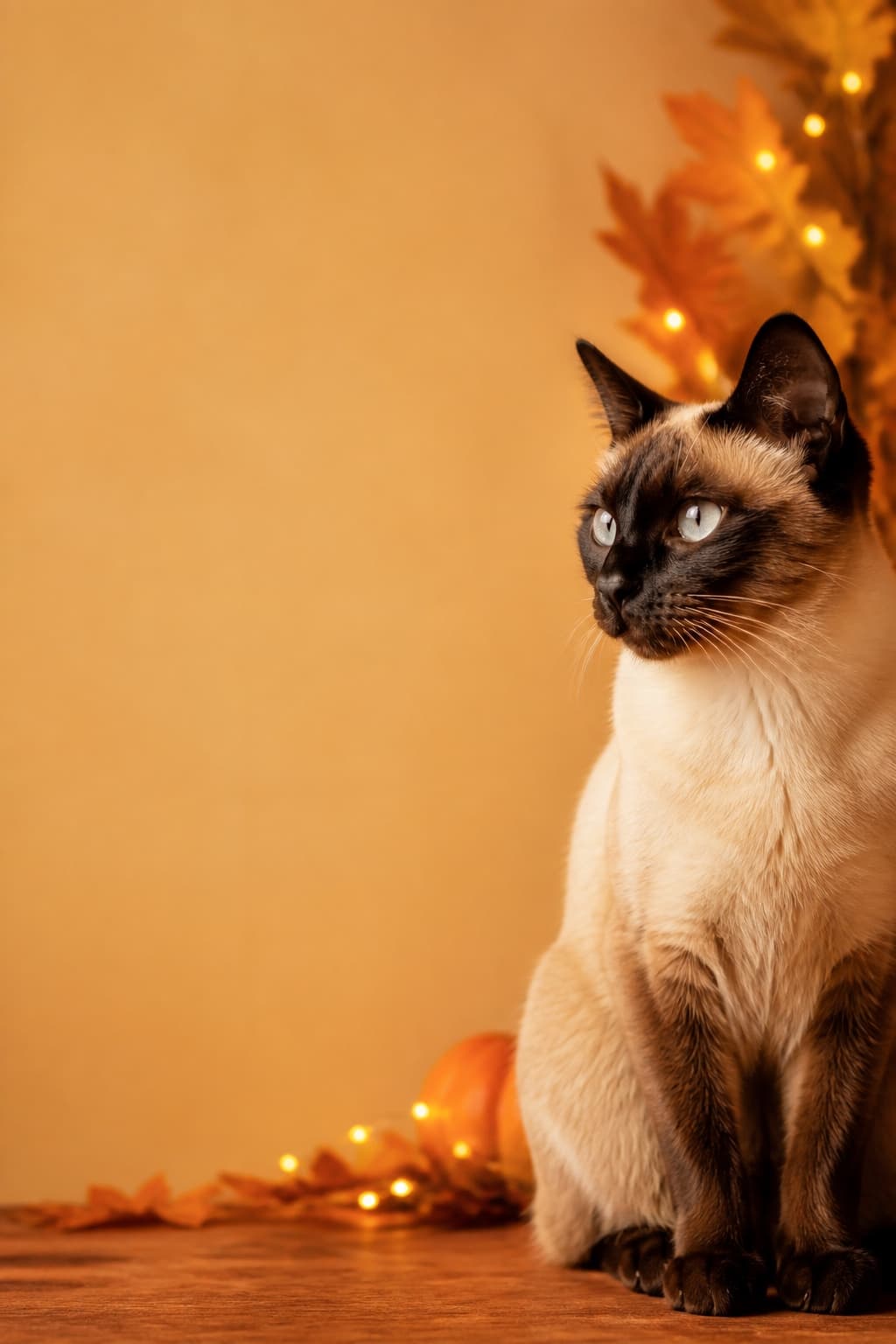
The Card style is composed for that specifically: the animal is pushed to one side and looking back across the frame, and the other half is left genuinely empty. No words are generated into the picture. You, or whoever prints the cards, set the greeting in type afterwards, which is the only way it comes out crisp and the only way you can change the wording later.
Festive without dressing the animal up
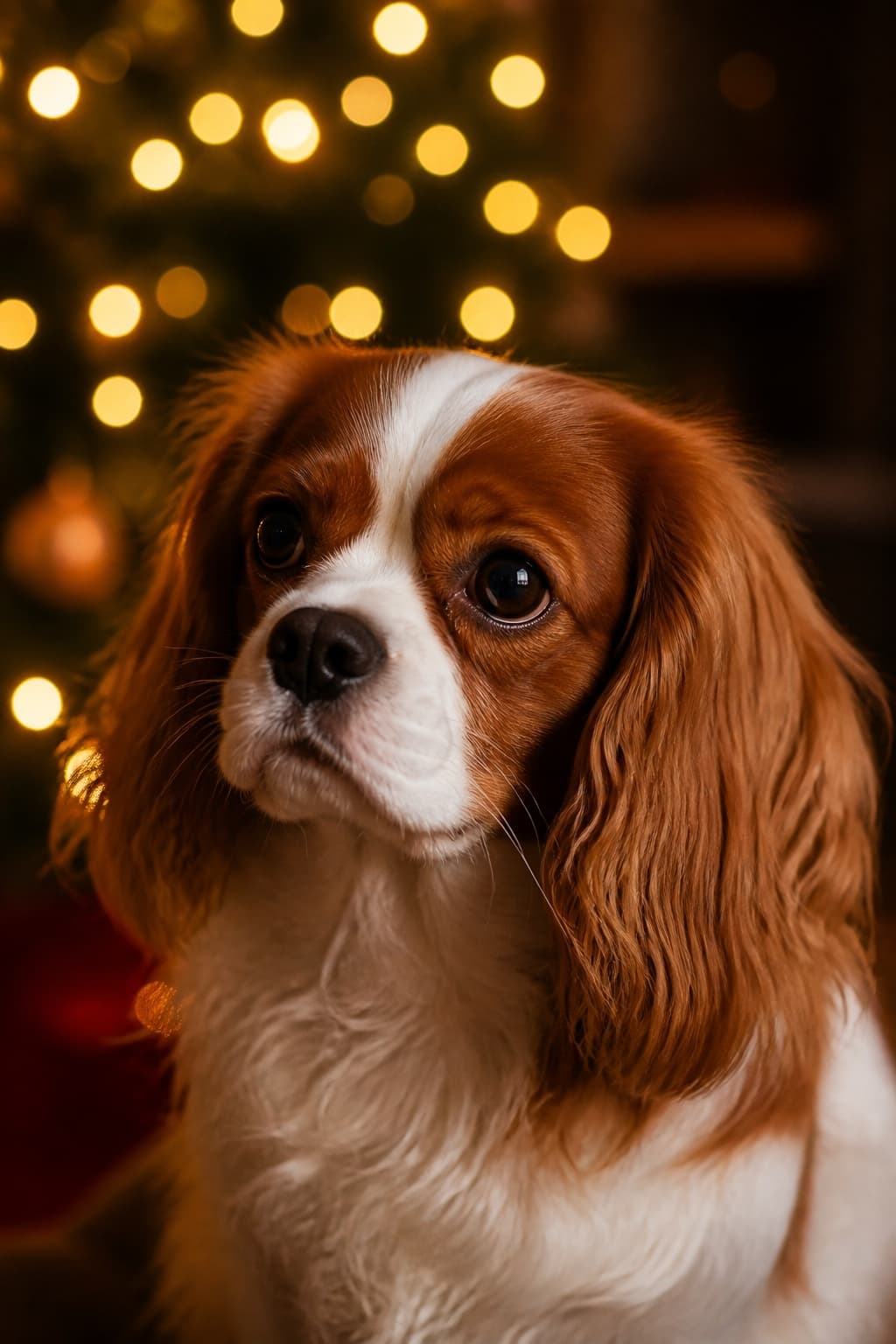
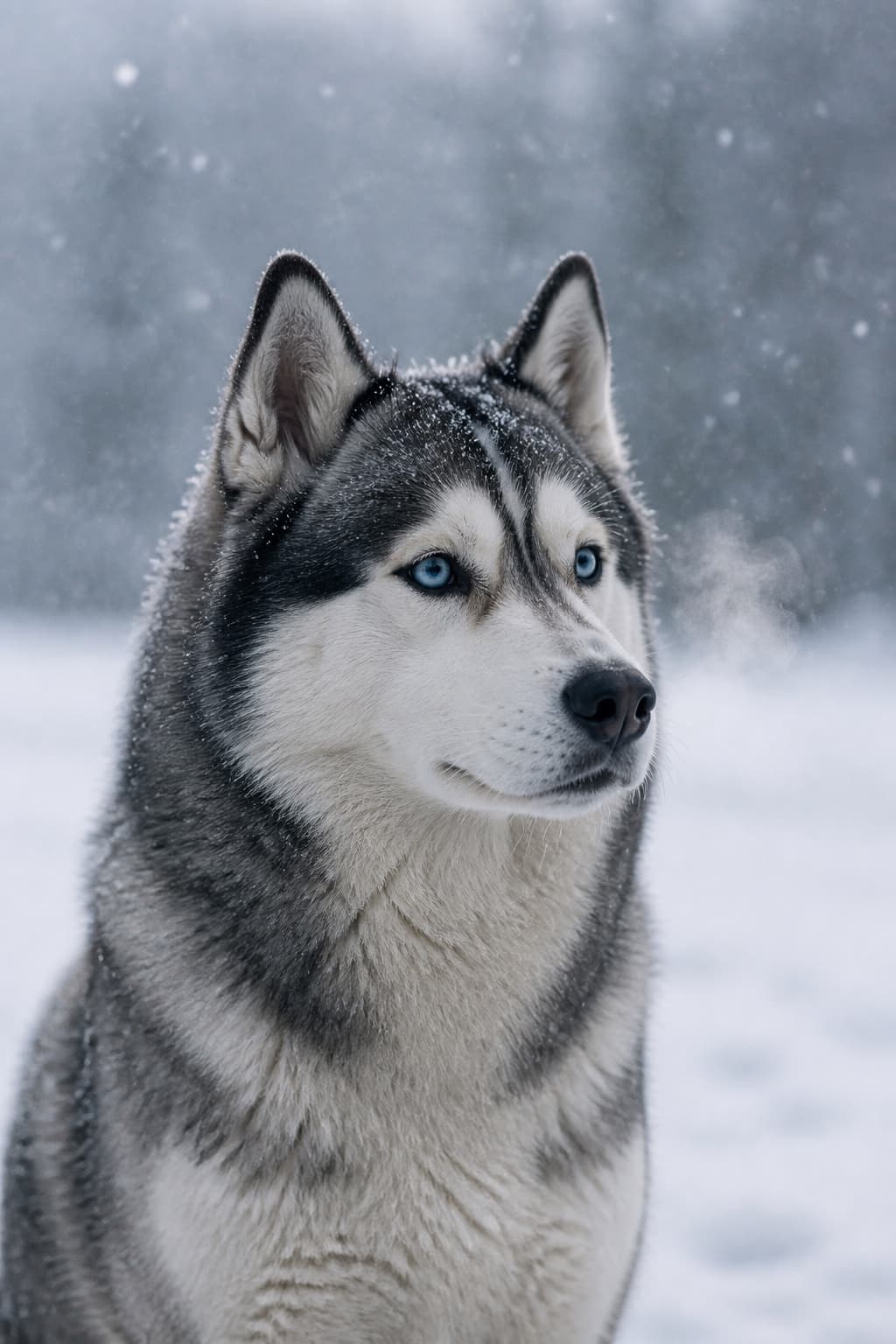
There is a version of this product that puts a felt hat on your dog, and we deliberately do not make it. A costume the animal never wore is not a picture of the animal, and props and hats are banned in every prompt in the catalogue for that reason. What is left is light: fairy lights thrown out of focus into warm orbs, a cold blue afternoon with snow coming down, the ordinary warmth of a room in December.
That has a practical advantage as well as an editorial one. A portrait that is festive by light rather than by novelty is still a good picture in February, so the images you do not put on the card are worth keeping and framing. Nothing in the frame ties it to one specific December, which is not something an antler headband can claim.
Working backwards from when the cards go out
The portraits themselves are quick — a preview in about a minute, a full gallery in roughly twenty-five — so the slow parts of a Christmas card are all the ones after that: choosing the image, laying out the greeting, ordering the run, and waiting for it to arrive. Those are the steps to leave room for, and they are exactly the steps that get compressed in the second week of December.
So run the free preview early, well before you have committed to anything, and find out whether the likeness holds on your animal. If it does, the picture is settled and every remaining decision is about paper and wording. We can't tell you what a given printer's cut-off will be — check theirs, and count backwards from it rather than forwards from now.